
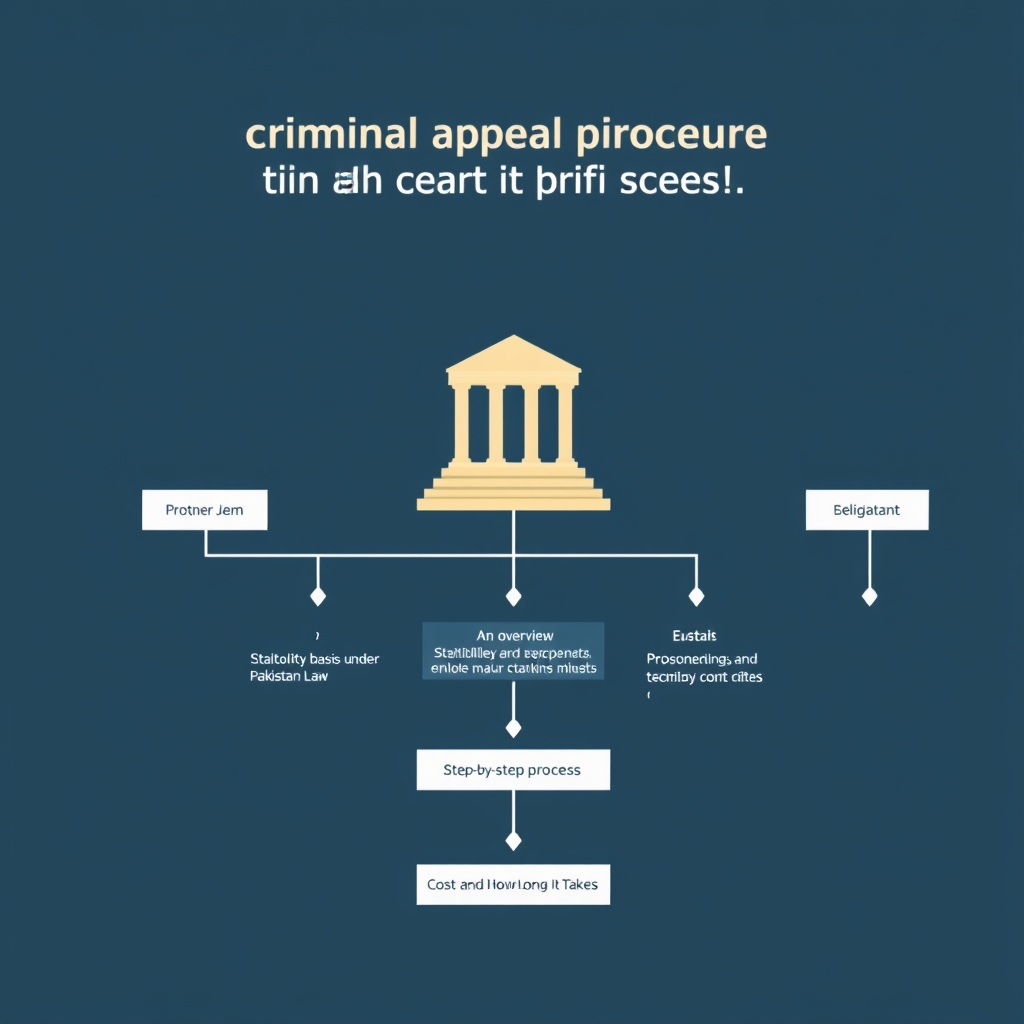

Criminal appeal procedure high court pakistan — An Overview
A disappointed litigant in Lahore or Karachi must act swiftly after a Sessions Court verdict. The Code of Criminal Procedure, 1898, sets strict deadlines for filing an appeal in the High Court. Section 401 grants the High Court broad powers to review judgments. It can confirm, alter, or reverse the lower court’s decision. This jurisdiction covers both factual findings and legal errors. For instance, a defendant sentenced to imprisonment may challenge the evidence admitted during trial. The High Court then examines whether the trial judge applied the law correctly. Procedural irregularities also form a valid ground for appeal. However, the process is not merely a re-trial. The appellate court generally relies on the record already created. Parties must submit detailed arguments referencing specific pages of the trial file. Provincial rules of court may impose additional formatting requirements. These local variations can affect how the appeal is presented. Legal practitioners must check the specific High Court’s standing orders. Missing a deadline usually renders the appeal time-barred. The law allows for condonation of delay in certain circumstances. Yet, this remains a discretionary power, not a right. Understanding these mechanics is vital for effective representation. The system aims to balance finality with justice. It ensures that errors in subordinate courts do not go uncorrected. This structure supports the integrity of Pakistan’s criminal justice framework.
Statutory Basis Under Pakistan Law
The Code of Criminal Procedure, 1898, forms the backbone of appellate practice in Pakistan. Section 401 grants High Courts explicit authority to review judgments, sentences, or orders issued by Sessions Courts or Magistrates. This power allows the appellate court to confirm, alter, or reverse lower court decisions. For instance, a defendant convicted in a District Court may challenge the verdict directly to the relevant High Court. The statute also distinguishes between direct appeals and revisional powers. Section 386 enables High Courts to examine records of subordinate courts to ensure proceedings remain legally sound. While this revisional jurisdiction is distinct from the appellate process under Section 401, both mechanisms serve to correct errors of law or fact. Practitioners must carefully identify which statutory provision applies to their specific case. Procedural nuances can vary slightly across provinces due to local court rules. Therefore, legal professionals often consult provincial high court directives alongside the central code. The timeline for filing these applications is strictly regulated. Missing a deadline typically results in the dismissal of the appeal. Understanding these statutory boundaries is essential for effective litigation. The law balances the finality of judgments with the need for judicial oversight. This dual purpose ensures that justice is not compromised by procedural mistakes. Courts in Sindh, Punjab, KPK, and Balochistan all operate under this unified statutory framework. However, local administrative practices may influence how these sections are applied in daily hearings.
Eligibility and Requirements
A party seeking to challenge a lower court decision in the High Court of Pakistan must first establish standing. Typically, the convicted person, the public prosecutor, or the victim’s legal representative may file an appeal. The Code of Criminal Procedure sets strict timelines for this action. For instance, an appeal against a Sessions Court judgment generally must be filed within sixty days of the order. Missing this deadline usually bars the application, unless the court grants leave to extend time for sufficient cause. The petition must include a certified copy of the judgment and a clear statement of grounds. These grounds should identify specific errors of law or fact, such as improper admission of evidence or a misdirected jury. Procedural compliance is vital. If the appeal is filed by the prosecution after an acquittal, the requirements differ slightly, often involving a certificate from the trial court. Provincial rules of court may impose additional formatting or filing fees, so local practice varies. Legal practitioners must verify these details in the relevant High Court. Without proper documentation, the court may dismiss the appeal at the threshold. This stage is not a retrial of the case. It is a review of the record to ensure justice was served. Understanding these eligibility criteria helps parties avoid costly procedural rejections.
Step-by-Step Process
The process begins with drafting a formal petition that identifies the specific grounds for challenging the lower court’s decision. This document must clearly articulate whether the appeal targets errors of law, factual misinterpretations, or procedural defects. Once the petition is ready, the appellant files it with the appropriate High Court registry, paying the requisite court fees. The court then issues a notice to the opposing party, typically the Public Prosecutor, who is given a set period to file a written reply. After both parties submit their arguments, the court may grant interim bail if the appellant is in custody. The hearing itself involves oral arguments where counsel presents their case before the bench. The judge examines the trial record and listens to submissions on the merits. Finally, the court delivers its judgment, which may confirm, modify, or reverse the original order. Timelines for these steps can vary slightly depending on the specific High Court rules in provinces like Sindh or Punjab. For instance, a defendant convicted in a Sessions Court in Lahore would follow the local procedural directives while adhering to the general framework of the Code of Criminal Procedure. Legal practitioners often advise filing within the statutory limitation period to avoid dismissal on technical grounds.
Costs and How Long It Takes
Filing fees in Pakistani High Courts remain modest compared to the potential financial stakes of a criminal conviction. The primary cost burden for most litigants is not the court fee, but rather the professional charges of legal counsel. A straightforward appeal might incur lower expenses, whereas complex cases involving extensive record examination or multiple hearings drive costs up significantly. There is no fixed statutory tariff for legal services, so fees vary widely between practitioners and regions.
Duration is equally unpredictable. The High Court’s docket is often congested, meaning an appeal filed today may not see its first substantive hearing for several months. Delays are common due to adjournments, pending applications, or the time required for the lower court to transmit the full trial record. For instance, a Sessions Court judgment may take weeks to compile and send to the appellate bench. Once listed, the hearing itself can conclude quickly if the issues are narrow, or stretch over multiple days if the defense raises substantial procedural challenges. Parties should anticipate a timeline measured in months rather than weeks. Provincial rules may influence specific procedural steps, potentially affecting overall speed. While the Code of Criminal Procedure sets the framework, practical timelines depend heavily on the specific court’s workload and the complexity of the case at hand.
Common Mistakes and How to Avoid Them
Missing the statutory deadline is the most fatal error in criminal appeals. Under the Code of Criminal Procedure, 1898, a party generally has thirty days to file an appeal against a conviction. Courts in Pakistan strictly enforce this timeline. A single day’s delay can render a valid legal argument moot. Practitioners must verify the exact date of the judgment to calculate this period accurately. Another frequent oversight involves the incomplete record. Appellants often submit only the final order without including the charge sheet, evidence lists, or previous applications. The High Court needs the full trial record to assess procedural fairness. Without it, the judge may dismiss the appeal for lack of material to review. Drafting the memo of appeal also requires precision. Vague allegations of “bias” without specific reference to transcript pages or witness statements weaken the case. Specificity matters. For instance, citing a particular page where the trial judge ignored a key alibi witness provides concrete grounds for review. Provincial rules of court may impose additional formatting requirements or fee structures. Always check the specific High Court’s local rules. Miscalculating court fees can also lead to rejection. Ensure the correct fee is paid at the time of filing. Finally, avoid relying on oral arguments to fix written deficiencies. The written memo sets the roadmap. If a point is not clearly argued in writing, it may be ignored during the hearing. Diligence in these procedural details preserves the substantive rights of the accused.
Frequently Asked Questions
Parties often wonder who can file a criminal appeal in the High Court. Generally, the convicted person may appeal against a conviction or sentence. The public prosecutor may also challenge an acquittal. Victims typically cannot appeal directly but may seek leave to do so under specific circumstances. Another common question concerns the timeline for filing. The Code of Criminal Procedure sets strict deadlines, usually thirty days from the date of the judgment. Missing this window can bar the appeal unless condonation is granted. Many litigants ask whether they need a lawyer. While not always mandatory, professional legal advice is highly recommended due to the technical nature of appellate arguments. Jurisdictional nuances may apply depending on whether the case originated in a Sessions Court or a Magistrate’s court. For instance, appeals from certain lower courts might require prior permission. The High Court holds the power to alter, confirm, or reverse the lower court’s decision. It can also modify the sentence if it finds the original punishment inadequate or excessive. Understanding these procedural steps helps parties manage their expectations. Legal practice in Pakistan varies slightly by province regarding local rules of court. Always verify the specific requirements for your jurisdiction before filing.
Learn more about your legal options with PakLegal.
This article is for general informational purposes only and does not constitute legal advice. Consult a qualified lawyer for guidance specific to your situation.