
Quick Answer: For Muslim marriages in Punjab, registration is a two-step process. First, the Nikah is solemnised by a licensed Nikah Khawan, who prepares the Nikahnama. Second, the Nikah Registrar files the Nikahnama with the relevant Union Council, where it is entered in the official marriage register. The governing statute is the Muslim Family Laws Ordinance, 1961, as amended in Punjab by the Punjab Muslim Family Laws (Amendment) Act, 2015.
Nikah vs. Registration — The Distinction That Matters
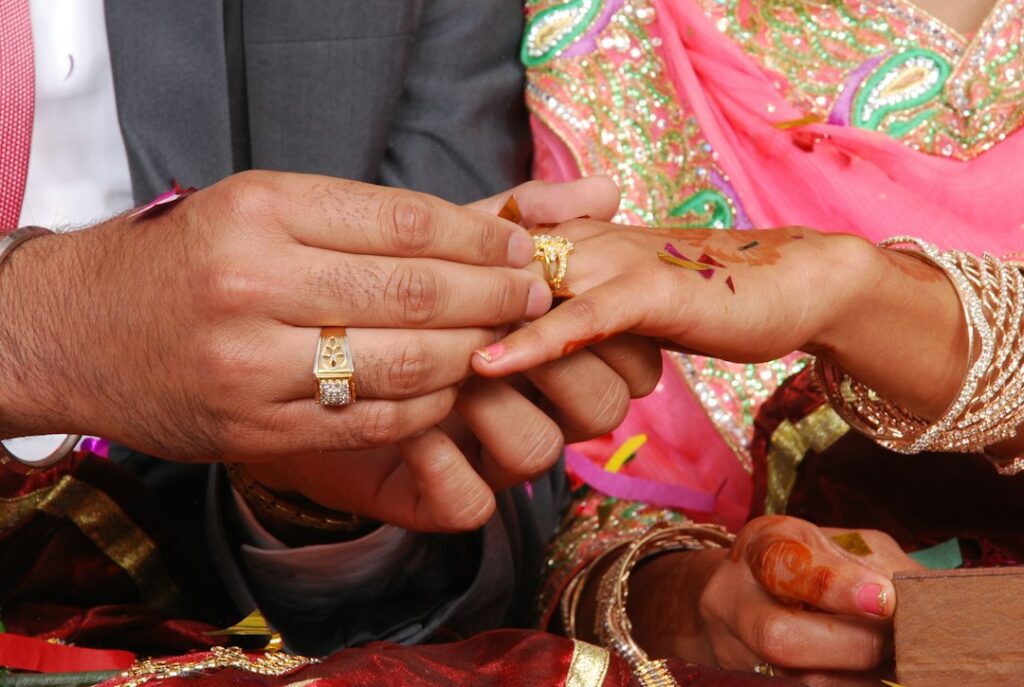
Nikah is the religious solemnisation of the marriage. Registration is the statutory recording of that nikah in the official register maintained by the Union Council. A validly solemnised nikah is legally effective between the parties even if it is not registered, but registration produces the documentary proof that matters for inheritance, legitimacy of children, foreign visas, pension claims, and court proceedings.
The Governing Legal Framework in Punjab
- Muslim Family Laws Ordinance, 1961 (MFLO) — federal framework. Section 5 deals with registration of marriage; Section 6 with polygamy; Section 7 with talaq.
- Punjab Muslim Family Laws (Amendment) Act, 2015 — Punjab-specific amendments strengthening the MFLO.
- the Punjab legislation amending the child marriage restraint framework (commonly referred to as the Punjab Marriage Restraint (Amendment) Act, 2015) — sets minimum age: 16 for females, 18 for males in Punjab.
- Local Government Act (Punjab) — establishes Union Councils and their administrative functions.
For non-Muslim marriages, the applicable statutes are the Christian Marriage Act, 1872, the Parsi Marriage and Divorce Act, 1936, the Hindu Marriage Act, 2017, and the Special Marriage Act, 1872.
Who This Applies To
The MFLO and Punjab amendments apply to Muslim couples marrying in Punjab, irrespective of domicile; Pakistani citizens marrying in Punjab; and foreign nationals where at least one party is Muslim and the marriage is solemnised in Punjab.
Documents Required
- CNIC of the bride and groom, or B-Form for minors where marriage is legally permissible.
- CNIC of the bride’s father or legal guardian.
- CNICs of two witnesses to the nikah.
- The Nikahnama — the prescribed form completed in Urdu by the Nikah Khawan and signed by all parties.
- Nikah Registrar’s registration certificate confirming the Nikah Khawan is licensed.
- Fee receipt issued by the Union Council.
Procedure — Step by Step
- Couple or their families engage a licensed Nikah Khawan.
- Nikah is solemnised, and the Nikahnama is completed in the prescribed form.
- Nikahnama is signed by the bride, groom, witnesses, and Nikah Khawan.
- Nikah Registrar prepares the filing copies.
- Nikah Registrar files the Nikahnama with the relevant Union Council.
- Union Council enters the marriage in the official register.
- Marriage Registration Certificate is issued.
Fees, Timeline and Costs
Fees for marriage registration in Punjab are set at the Union Council level and vary. They cover the Union Council registration fee, the Nikah Registrar’s professional charges, and form or stamp charges. The current fee should be confirmed directly with the relevant Union Council.
Consequences of Non-Registration
- Inheritance claims by a spouse or child can be harder to establish without a registered Nikahnama.
- Legitimacy of children may be challenged in some contexts.
- Overseas visa applications require registered proof of marriage.
- Pension and service benefits for a spouse may be affected.
Common Mistakes
- Confusing nikah with registration.
- Using an unlicensed Nikah Khawan, whose Nikahnama may not be accepted.
- Incomplete Nikahnama — missing signatures, missing witness details, or Urdu-form errors.
- CNIC mismatches in name spelling or number between the Nikahnama and the CNICs.
- Assuming a foreign marriage is automatically registered in Pakistan.
- Relying on a marriage licence — no such licence exists for Muslim marriages in Punjab.
Practical Checklist
- Confirm both parties’ CNICs are valid and names match across documents.
- Confirm the Nikah Khawan is licensed and the Nikah Registrar is available.
- Complete the Nikahnama in Urdu in the prescribed form.
- Have all witnesses present with CNICs.
- Pay the Union Council fee and retain the receipt.
- Collect the Marriage Registration Certificate.
- Update marital status with NADRA.
Frequently Asked Questions
Is registration mandatory for a Muslim marriage in Punjab? Registration is a statutory obligation under the MFLO framework. The marriage is religiously valid upon nikah, but registration is what produces official proof for inheritance, legitimacy, visas and pension claims.
Which office registers a Muslim marriage in Punjab? The Union Council, through the Nikah Registrar appointed under the MFLO framework.
What is a Nikah Registrar? A person appointed or licensed under the MFLO framework to file Nikahnamas with the Union Council.
What is the minimum age for marriage in Punjab? Under the the Punjab legislation amending the child marriage restraint framework (commonly referred to as the Punjab Marriage Restraint (Amendment) Act, 2015), the minimum age is 16 for females and 18 for males.
Can a nikah be registered without the bride’s consent? No. Free consent of both parties is a legal requirement.
Can a marriage performed abroad be registered in Punjab? Yes, but through a separate route: attest the foreign marriage certificate from the issuing country and the Pakistani mission, then file it with the relevant authority in Pakistan.
What if the Nikahnama is lost? A certified copy can be obtained from the Union Council where the marriage was registered.
Is a marriage licence required in Punjab? No. There is no marriage licence for Muslim marriages in Punjab.
Are non-Muslim marriages registered the same way? No. Christian, Hindu, Parsi and civil marriages have their own statutes and registrars.
Does registration affect inheritance rights? Registration is strong evidence of marriage, which is foundational for inheritance claims.
Final Takeaway
Marriage registration in Punjab is a two-stage process — religious solemnisation and statutory filing — and the operative law is the Muslim Family Laws Ordinance, 1961, as amended in Punjab in 2015. The correct office is the Union Council, working through the Nikah Registrar.
Need Help with Marriage Registration or Documentation?
Pak Legal Desk assists with legal research, document review, Nikahnama attestation guidance, and family-law consultations for readers in Pakistan and overseas. If you are registering a marriage, correcting a Nikahnama, or dealing with a documentation dispute, you can request a legal research brief or a consultation through our platform.
Before acting on any specific fee, deadline, form or procedural requirement described in this article, readers should confirm the current position directly with the relevant official source: the Pakistan Code (pakistancode.gov.pk), the applicable provincial code site, SECP (secp.gov.pk), the Directorate General of Immigration and Passports (dgip.gov.pk), the Federal Board of Revenue (fbr.gov.pk), or the relevant provincial police or transport authority.
Official Fees and Where to Check Them
Marriage registration fees in Punjab are set at the Union Council level and are revised from time to time. The applicable amount depends on the type of certificate requested and the specific Union Council.
Confirm the current fee with your relevant Union Council before applying. The Local Government and Community Development Department of Punjab is the policy authority.
- Punjab: Local Government and Community Development Department – lgcd.punjab.gov.pk
- Your Union Council: Contact details are listed through the same department and on the relevant district government website.
Legal Information Disclaimer
This article is for general educational and informational purposes only. It is based on Pakistani and Punjab-specific law as understood at the time of writing. Marriage registration procedures, fees and Union Council practices vary locally and change periodically. This article does not constitute legal advice and does not create a lawyer-client relationship. No guarantee of any outcome is provided. Readers should verify the current position with the relevant Union Council and obtain professional legal advice for their specific circumstances.